
Does Teller talk?
Teller is a famous American illusionist and magician known for being the silent part of Penn and Teller’s comedy magic duo. In recent years, there have been three instances of Teller talking in public.
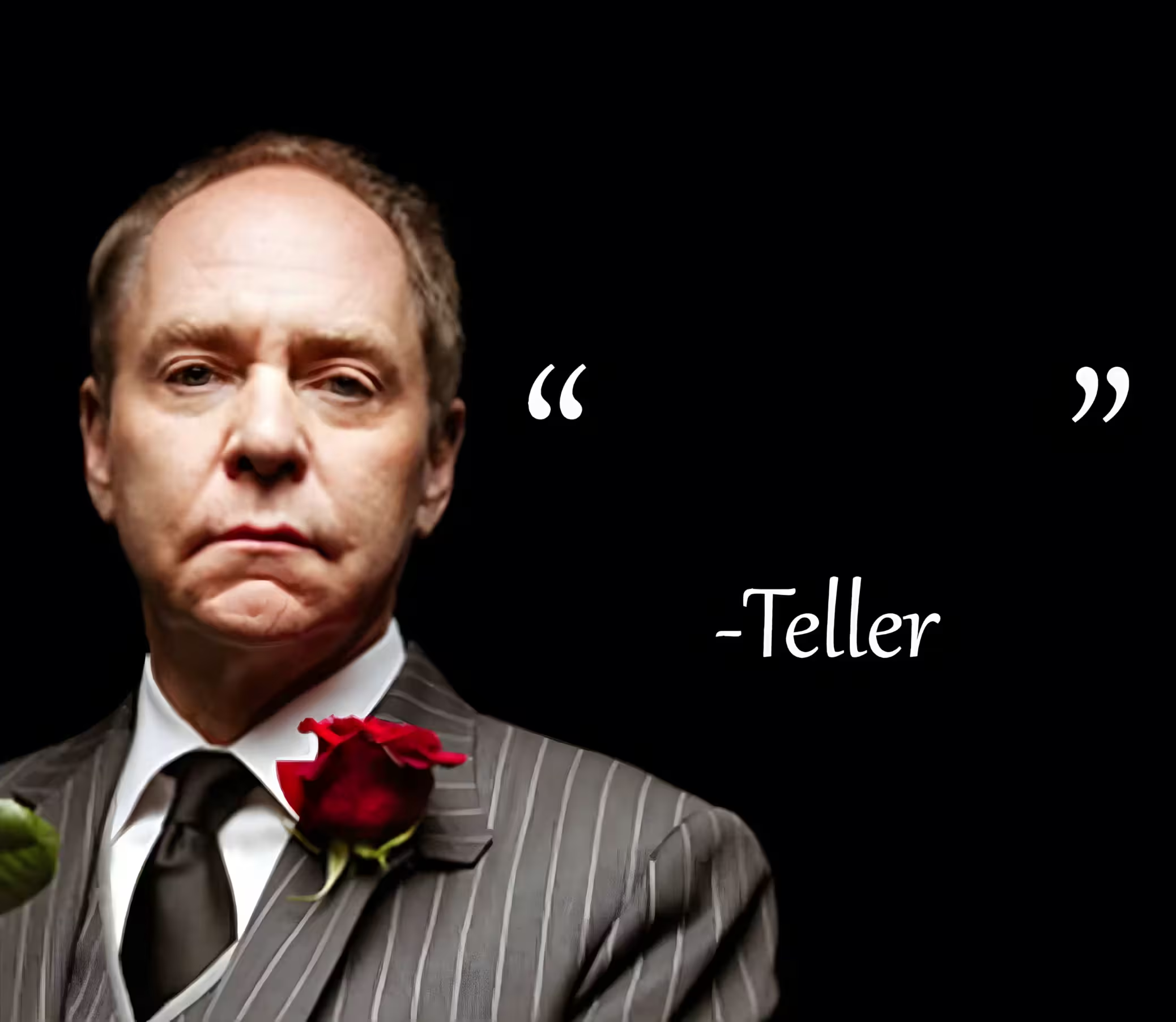
Teller’s three reasons for not speaking are given below.
-
- Silence minimizing heckling.
- The best magic doesn’t need words.
- Silence heightens the focus of both the audience and the performer.
Teller believes the best magic doesn’t need words, and silence heightens the focus of both the teacher and the student, thus enhancing the magical entertainment. In 2013, Teller was caught talking, and teaming up with Penn Jillette was the right decision for audiences. Teller’s choice to remain silent is deliberate since it adds depth to his silent stage persona. Silence is a masterful addition to Teller’s arsenal of illusion. Teller’s purposeful silence captivates audiences, pulling them into Teller’s magical theater where words are redundant, and magic speaks volumes.
Mute magic: Teller’s unheard tale
Before the Penn and Teller Fool Us show, magician Teller was famous for being the silent part of the team’s two-pronged comedy magic performance (plus the Fool Us host Alyson Hannigan, who got replaced). You can’t imagine Teller talking. This confusion leads to the three questions listed below.
Can Teller talk?
Does Teller speak?
Does Teller’s voice sound like a kazoo?
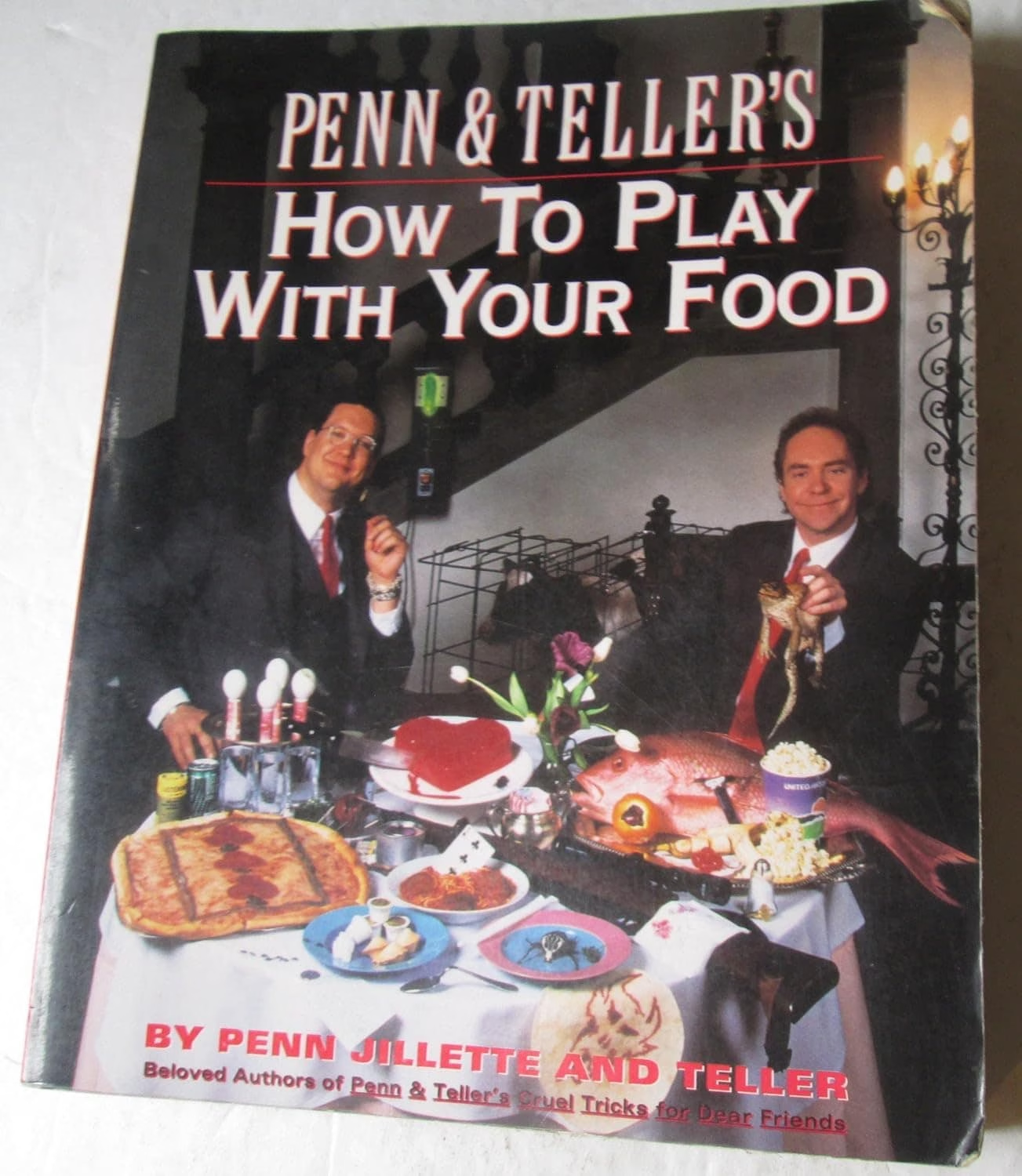
Teller likes to do tricks in hotel rooms, cars, on planes.
Yes, no, and no.
Not until recently, that is.
Mime over matter
Why Teller lets his magic do the talking
“I can lie to the audience without speaking to the audience.”
Raymond Joseph Teller
“If a moron waves a handkerchief and pulls out a dove, people applaud. That’s the basic form of magic. The art of magic is taking an idea and making it into something amazing and real.”
Raymond Joseph Teller
The quiet conjurer
In private, Teller is not mute, despite his public persona being mute. According to magician Jon Finch, yes. In private, the magician Teller from Penn & Teller speaks. In public, rarely. Here’s what “rarely” means: In the latest 53 years, there have been only three instances of Teller talking. And his voice does not sound like a kazoo. Teller talking sounds perfectly normal (for clarity, I’ve added subtitles to the video below).
Does Teller have a voice?
Teller does have a voice. Teller is not a mute. As you’ll see below, after decades of playing the role of a mute, hearing his voice can be unsettling.
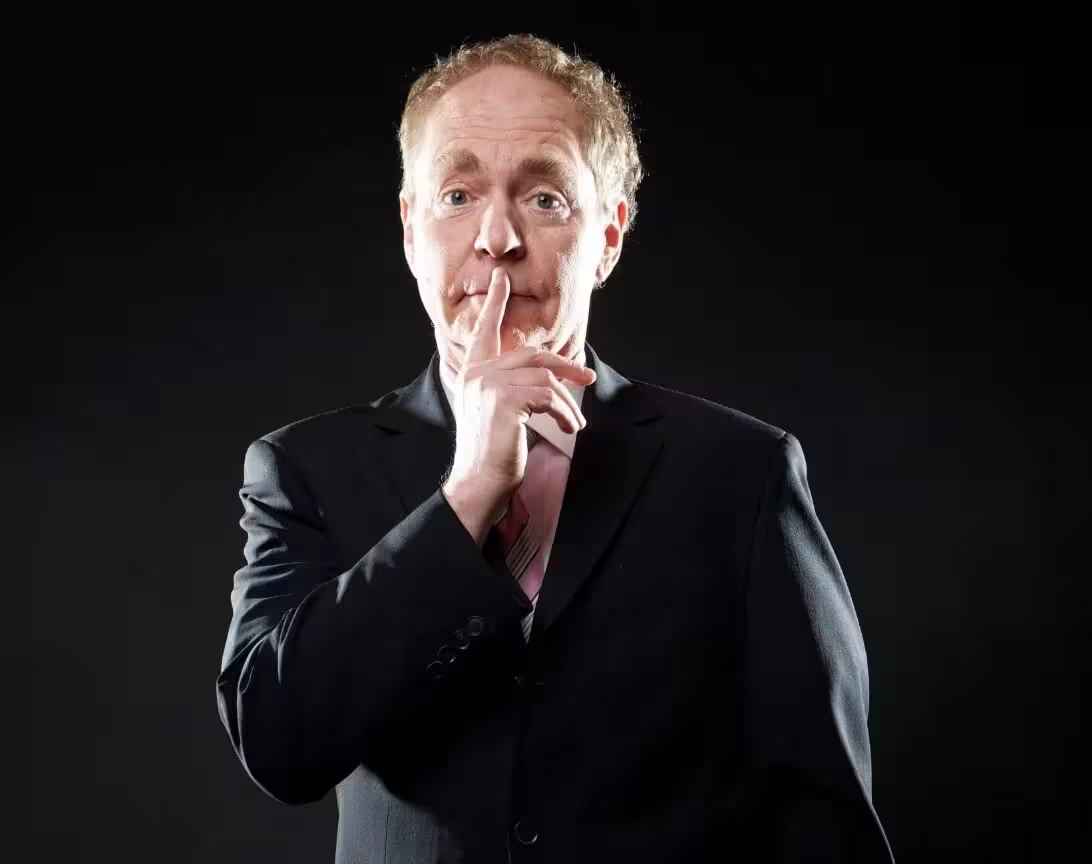
Why doesn’t Teller speak?
The three reasons Teller doesn’t speak are listed below.
- Silence minimizes heckling.
- The best magic doesn’t need words.
- Silence heightens the focus of the audience and performer. A good teacher knows whispering will silence a classroom better than yelling. In Teller’s early days, when providing entertainment at college fraternities, Teller discovered that when he was quiet during his show, the audience focused on his act than heckling him.
Enjoy the silence.
When was the last time a “talking Teller” was spotted?
In 2013, Teller was caught talking. Scroll down for the video.
Why did Teller team up with Penn?
Audiences love contrasting duos. Teaming up with the bombastic, carnival barker Penn was the right decision.
Audiences love contrasting duo entertainers including the duos listed below.
- Laurel & Hardy
- Abbott & Costello
- Dean Martin & Jerry Lewis
- Gene Wilder & Richard Pryor
- Chris Farley & David Spade
- Chris Tucker & Jackie Chan
Hence, Penn & Teller.
The voice of silence
Does Teller Talk? When magician Teller does speak publicly, the tongue-tied American illusionist is well-spoken. The second reason is magic doesn’t need words. Teller found the concept of “patter” superfluous. Teller’s third reason was that silence heightens the focus of both the audience and the performer, thus enhancing the magical entertainment. As a Latin professor, Teller understood that silence narrows the focus of both the teacher and the student (and thus the performer and the audience), thereby enhancing the moment’s intimacy. Teller’s pairing up with Penn Jillette cemented his choice to remain silent. Read below his own words in 2013 about why Teller doesn’t speak.
Hearing the unheard: actions speak louder
Teller’s own words, 2013
“In real life, talking is a lovely thing. I enjoy working silent for an audience because it’s intimate in a theater. When all the sounds are gone, you have to look at the audience, and the audience have to look at you. The connection is deep and intimate. There’s no words to distract you. They’re looking at every line of your face, and I’m looking back at them. But in everyday life, I find the ability to speak convenient. In college, I came up with the idea of performing silent. I’d become tired of the concept of magic patter. Most magicians would be saying idiotic stuff, “Here I have a red ball.” Redundant, dopey, pretentious blather. “In this room, the great Houdini once…” It made me want to pass out. It was a rebellion against patter. It was to say I believe I can lie to the audience without speaking to the audience. I didn’t study the great silent performers of the past. Other people may go deep and fill their imaginary drawers. But for me, it was straightforward. One day, Ishut up. For me, “going at the character” is shutting up. Ishut up.”
Can Teller of Penn and Teller speak?
Shattering silence: Teller talks and Penn catches Teller talking for the last time
Does Teller ever talk? Does Teller speak in real life even? What does Teller sound like? I couldn’t believe my ears when I heard Teller talking! Hear Teller’s voice for yourself.
Teller magician talking
What is Teller’s real name?
Teller’s real name is Raymond Joseph Teller. He legally changed his name to his stage name, “Teller,” and even has a U.S. Passport with the single name, “Teller.”
Teller (magician): the silent magician
After Central High School in Philadelphia, where he graduated in 1965, Teller earned a Bachelor of Arts in Classics from Amherst College in 1969. The choice started as crowd control at rowdy frat shows and hardened into an artistic discipline. Shadows is the red-rose illusion, a near-silent piece in which Teller cuts the painted shadow of a rose on a canvas and watches the petals fall, one by one, on the flower beside it.
Penn & Teller began their Las Vegas residency at the Rio All-Suite Hotel and Casino in 2001, and as of 2026 the show is celebrating its 25th anniversary. Tim’s Vermeer is Teller’s 2014 directorial debut, a documentary about inventor Tim Jenison’s quest to recreate a Johannes Vermeer painting using optical devices. Teller co-directed The Tempest in 2014 and Macbeth in 2018, both with playwright Aaron Posner, and both productions integrated stage magic into Shakespeare’s text.
This guide covers everything you need to know about Teller, the silent half of the legendary magic duo Penn & Teller. You’ll learn who Raymond Joseph Teller is, why he never speaks on stage, and whether his silence is a performance choice or something else. Inside this guide: a tour of his most famous illusions, including Shadows, the Floating Ball, and the Bullet Catch, plus the story behind his twenty-fifth year of Las Vegas residency at The Rio.
The article also walks through Penn & Teller: Fool Us, his off-stage work directing Tim’s Vermeer, his Shakespeare collaborations on The Tempest and Macbeth, and his published writing for Smithsonian and Nature Reviews Neuroscience. By the end you’ll have a clear picture of his career, his methods, his awards, and his life in 2026.
Who is Teller?
Teller is the silent half of the American magic duo Penn & Teller, a master illusionist who delivers visual poetry
What is Teller’s real name?
Teller’s real name is Raymond Joseph Teller, the legal mononym he adopted after dropping his birth.
What is Teller’s first name?
Teller’s first name is Raymond.
Teller’s early life and education
Teller’s early life and education shaped the disciplined, literary mind behind the silent magician audiences see today. His father was of Russian-Jewish descent, his mother came from a Delaware farming family, and Raymond grew up an only child in a household that valued reading, art, and quiet observation. Curious fans often ask how tall is teller magician, and while no official height is published, he stands visibly shorter than his 6-foot-6 partner Penn Jillette and generally appears around average height.
After Central High School in Philadelphia, where he graduated in 1965, Teller earned a Bachelor of Arts in Classics from Amherst College in 1969. That grounding in Latin, Greek, and ancient literature later informed the structure, pacing, and storytelling of his most famous illusions.
Where did Teller grow up?
The magician Teller grew up in Philadelphia. Growing up in Philadelphia gave Teller a working-class East Coast sensibility blended with a deep love of museums, libraries, and theater. As a boy he watched local magicians, read about Houdini, and sketched stage illusions in his notebooks. People sometimes ask is teller a good magician based on his quiet stage presence, and the answer comes from his Philadelphia roots: he trained relentlessly, treating sleight of hand the way a violinist treats scales.
Both his parents were visual artists who encouraged him to study fine art and literature alongside conjuring, while the surrounding neighbourhood gave him the gritty, observational humor that still flavours his act. He has often credited Philadelphia’s working theatres and amateur magic clubs with teaching him that craft beats charisma, a belief that defines every silent gesture on stage today.
Amherst College and the Classics degree
At Amherst College in Massachusetts, Teller earned his BA in Classics in 1969 and absorbed the rigour of Greek tragedy, Latin poetry, and ancient rhetoric. Fans wondering how old is teller the magician can do the math: born February 14, 1948, he turned 21 in his senior year and graduated already obsessed with magic but officially trained as a classicist. His thesis-level work focused on close reading and dramatic structure, skills he’d later transplant into his illusions, where every beat resembles the rising action of a Sophoclean play. While classmates pursued law school or graduate study, he returned home to the East Coast with a degree in dead languages and a head full of card moves, and those Amherst years gave him the literary toolkit that still distinguishes his magic from purely technical conjuring.
Teaching Latin and Greek before magic
Before turning fully professional, Teller taught Latin and Greek at Lawrence High School in Lawrenceville, New Jersey, spending six years in front of teenagers who had no idea their teacher was a future Las Vegas headliner. People who ask does teller magician have children sometimes assume his classroom years produced a family, but he has no publicly known children, and his marital status remains private to this day. By day he conjugated verbs and parsed Homer; by night he drove to magic clubs, performed at private parties, and sharpened a silent act that already showed his signature precision. Students remembered him as eccentric, intense, and weirdly funny, qualities that would soon serve him in show business, and the classroom honed his timing, his patience, and his ability to hold a room with nothing but a steady gaze.
How Teller became a magician
Teller became a magician through a slow, stubborn climb that started with childhood obsession and ended with a partnership that changed American conjuring. People often ask is miles teller related to the magician, and the answer is no, the actor Miles Teller has no family connection to Raymond Joseph Teller of Penn & Teller. Raymond’s path began in his Philadelphia bedroom with library books and a pack of cards, then moved through college talent shows, frat parties, and high school classrooms before landing him in professional theatres. Without ever attending a magic academy, he apprenticed himself to printed manuals, late-night practice, and the harsh classroom of live audiences, and by the early 1970s he had developed a wordless style that nobody else in America was performing, an originality that became his ticket out of teaching and into magic full time.
Frat-party origins and the silent act
Teller’s silent act was born in noisy college frat parties, where drunken students hurled beer, jokes, and insults at any performer foolish enough to speak. Audiences curious about is teller the magician married won’t find an answer in those rowdy years, since his romantic life remains private and undisclosed even now, but his stagecraft was forged precisely in that beer-soaked chaos. Quickly, he discovered that talking only invited heckling, while silent performance forced the room to lean in and watch. By refusing to speak he stripped hecklers of their target and turned each trick into a small, mesmerising play, a tactical silence that hardened into artistic philosophy and gave him a vocabulary of gestures, glances, and props that did the storytelling for him by the time he left teaching.
Meeting Penn Jillette in 1974
In 1974, mutual friend Wier Chrisemer introduced Teller to Penn Jillette, and the pair recognised an immediate creative chemistry despite their opposite temperaments. People ask is teller magician deaf because he never speaks on stage, but he isn’t deaf and not mute, and he speaks freely off-stage in a warm, articulate voice. When Jillette’s loud, aggressive showmanship met Teller’s silent precision, the contrast clicked instantly, like a brass band meeting a string quartet. Their first collaborations were rough, experimental, and frequently confrontational, yet both men shared a love of skepticism, comedy, and exposing fakery, and that 1974 introduction set the foundation for a partnership that would outlast most marriages, most rock bands, and almost every other duo in entertainment history.
The Asparagus Valley Cultural Society
The Asparagus Valley Cultural Society was the trio that Teller, Penn Jillette, and Wier Chrisemer formed together in the mid-1970s, a vaudeville-style act mixing magic, music, and absurd comedy. Audiences asking does teller magician talk during those early shows would’ve heard him stay silent on stage, while Jillette delivered the patter and Chrisemer played accompanying music. Starting at the Minnesota Renaissance Festival, the group built a cult following at the Phoenix Theater in San Francisco, where their strange, literate humor finally found a city that loved it. Compared with today’s Penn & Teller spectacles their staging was raw, intimate, and unpolished, yet the DNA was unmistakable, and once Chrisemer stepped away in 1981 the remaining duo carried that Asparagus Valley DNA into everything that followed.
Going pro as Penn & Teller in 1981
Penn and Teller went pro as a duo in 1981, dropping the Asparagus Valley name and committing to a two-man act that has continued ever since. They toured clubs and college venues before landing off-Broadway runs that earned national attention. On the question of has magician Teller ever been married, the record stays quiet, with Penn cracking on podcasts that Teller “has been” without ever confirming a name. No public spouse, partner, or children have been documented.
Why doesn’t Teller speak on stage?
Teller doesn’t speak on stage because silence makes audiences watch his hands instead of his mouth, deepening the magic and stripping the act of cliché magician chatter. The choice started as crowd control at rowdy frat shows and hardened into an artistic discipline. Penn carries the verbal load while Teller mimes and stares. As for does Teller magician have a wife, no public record confirms a current marriage, and Teller has long refused to discuss his romantic life.
The frat-party origin story
The frat-party origin story explains who is Teller magician at his core, because his silence began as a defense against beer-throwing hecklers at college shows in the 1970s. Teller noticed that talking magicians invited interruption, while a silent performer forced drunk crowds to lean in and listen with their eyes. He kept the silence after the frats, refining it into a deliberate stance that complemented Penn’s loud narration.
Does Teller ever talk in public?
Teller does talk in public, giving long, articulate interviews to journalists and podcasters off-stage. He spoke at San Diego Comic-Con in 2011 and broke his on-stage silence at the 2013 Hollywood Walk of Fame ceremony. On how does Teller do the goldfish trick, he has hinted the bit relies on a hidden bag, careful misdirection, and sleight of hand. To swallow and regurgitate live goldfish, Teller secretly stows the fish, mimes the swallow, then produces them at the finish.
Can Teller speak?
Teller can speak normally and has a pleasant, measured voice he uses freely in interviews. The reason doesn’t the magician Teller talk on stage comes down to art, not anatomy: he made a creative choice decades ago and stuck with it. Documentaries and audio commentaries feature Teller speaking at length about magic and skepticism. He is articulate and dryly funny, which makes the contrast with his silent stage character even sharper.
Who are other silent magicians besides Teller?
Other silent magicians include Tony Slydini, Tom Mullica, Michael Carbonaro, and the older “Carlo the Italian” mime-magic tradition, all whom worked without patter to focus attention on the hands. Slydini, an Italian-American close-up master, influenced generations with wordless misdirection rooted in timing and gaze control. The magician who works with Teller is Penn Jillette, the loud half of the duo who narrates while Teller performs in silence.
Teller’s most famous magic tricks
Teller’s most famous magic tricks are built around silent storytelling than flashy reveals. The recurring search teller magician why doesn’t he talk usually leads fans to clips of these routines, where his silence amplifies the suspense. Four pieces define his catalog.
– Shadows, a near-silent rose-and-knife illusion that fells petals on a live flower across the room.
– The Floating Ball, in which a small white sphere drifts and circles his body as if alive.
– The Bullet Catch, the duo’s most dangerous routine using signed.357 Magnum rounds.
– The Cups and Balls, performed with clear plastic cups so audiences can scrutinize every move.
Shadows (the red-rose illusion)
Shadows is the red-rose illusion, a near-silent piece in which Teller cuts the painted shadow of a rose on a canvas and watches the petals fall, one by one, on the flower beside it. He performs the routine without saying a word, and the only sound is the soft drop of petals. Answers to can Teller magician talk lie off-stage: here he stays mute and lets the rose finish his sentence.
The Floating Ball
The Floating Ball is a silent set piece in which a small white sphere drifts, hovers, and circles Teller’s body as if alive, before settling back into a child’s basket. Teller passes a metal hoop around the ball to suggest there are no wires. The question is teller magician mute reappears under every clip, but he chooses silence to keep the focus on the ball than himself.
The Bullet Catch
The Bullet Catch is the duo’s most dangerous routine, in which Penn and Teller simultaneously fire signed.357 Magnum rounds and appear to catch each other’s bullets between their teeth. The piece took years to refine, and they perform it with live firearms, eye protection, and a strict safety protocol. Teller stays silent throughout, while Penn narrates the risk in detail. The contrast between Penn’s commentary and Teller’s wordless stare gives the bit unbearable tension.
How “Shadows” works
Shadows works through a hidden assistant offstage who cuts the rose stems in sync with each painted petal Teller slices on canvas. Teller stands beside an easel and a red rose, with a lamp casting the rose’s shadow onto the canvas. He paints the shadow, then draws a knife through each painted petal. As his blade meets the canvas, a corresponding petal drops from the live flower across the room.
A thread mechanism handles fine timing for the smaller petals, while the offstage assistant tracks his blade through a hidden sightline. Smithsonian Magazine published a partial reveal of the method in 2012, with Teller’s blessing, in his essay on the seven principles of deception. The piece runs about three silent minutes and remains the centerpiece of the Penn & Teller live show.
Penn & Teller as a duo
Penn & Teller have performed as a comedy magic duo since 1981, blending sleight of hand with skeptical commentary about deception itself. Penn Jillette handles the patter, the showmanship, and the loud philosophical asides, while Teller executes the silent, intricate handwork. Their act differs from traditional magic acts because they often expose methods mid-trick, then fool the audience anyway with a second layer of deception.
After building a reputation in off-Broadway runs through the 1980s, the pair graduated to specials on HBO and NBC before settling into a permanent Las Vegas residency, with material that mixes card work, fire eating, bullet catches, animal-rights gags, and political skepticism. Critics describe them as the longest-running and most successful headlining act in modern magic, distinguished by craft, longevity, and an unwillingness to pander to mystical framing.
Stage personas: loud vs silent
The contrast between Penn’s loud orator persona and Teller’s silent craftsman role drives the act. Standing six foot seven, Penn Jillette narrates every beat with carnival-barker volume, while Teller works in absolute silence beside him. Penn explains, jokes, and confronts the audience, whereas Teller demonstrates, reacts, and pulls focus through gesture alone.
Penn talks about the trick; Teller does the trick. That split lets each performer specialize: one handles risk, comedy, and verbal misdirection, the other handles precision and emotional storytelling. Audiences read Penn as the brash skeptic and Teller as the sensitive artist, though both write the act together, and the dynamic mirrors classic comedy duos like Abbott and Costello, except the silent partner here is the technician than the buffoon.
Las Vegas residency at The Rio (25 years)
Penn & Teller began their Las Vegas residency at the Rio All-Suite Hotel and Casino in 2001, and as of 2026 the show is celebrating its 25th anniversary. The pair perform in the Penn & Teller Theater, a 1,500-seat venue named for them inside the Rio, running roughly 200 shows per year, six nights a week, making theirs the longest-running headliner act at any single Las Vegas hotel. Each show lasts about 90 minutes, and afterward both performers stay in the lobby to greet every audience member who wants a photo. Outlasting competitors at The Mirage, Caesars Palace, and the MGM Grand, the residency draws its longevity, industry observers say, from constant material rotation than fixed nostalgia.
Penn & Teller: Fool Us
Penn & Teller: Fool Us is a magic competition series in which working magicians try to fool the duo with a single trick. Launched in 2010 on ITV in the United Kingdom, the show moved to The CW in 2015 with Las Vegas as its permanent home. Each magician performs, and afterward Penn and Teller speak in code to indicate whether they figured out the method, with a successful fool earning the magician a spot opening the Vegas show.
The CW has since renewed Fool Us for an unprecedented 11th season, making it the longest continuous American magic television series, and the format rewards craft over spectacle because Penn and Teller spot misdirection within seconds. Alyson Hannigan and Brooke Burke have hosted across various seasons.
Penn & Teller: Bullshit!
Penn & Teller: Bullshit! Ran on Showtime from 2003 to 2010 and applied the duo’s skeptical, libertarian lens to pseudoscience and conspiracy theories. Each half-hour episode targeted a single claim, ranging from psychic mediums and feng shui to creationism, recycling, and the death penalty. Penn delivered the loud commentary while Teller appeared on camera in supporting visual gags, and across eight seasons and 89 episodes the series won multiple awards from skeptic and freethought organizations, with critics praising its humor while subjects of episodes occasionally pushed back in print.
Beyond the awards, the show solidified Penn and Teller’s reputation as advocates for critical thinking, separating them from magicians who lean into mystical framing. Bullshit! Remains a defining text in skeptic media, frequently cited by science communicators and rationalist authors.
Teller off-stage
Off-stage, Teller works as a film director, a Shakespeare collaborator, and an essayist for science and culture publications. Over the past two decades he has expanded beyond live magic into projects that share the same fascination with perception and craft, choosing collaborators carefully and working only on projects he can shape from concept to delivery. Unexpectedly, his off-stage work is full of words: scripts, essays, and stage direction notes. The pattern reveals that his silence on stage is a performance choice, not a personal trait, and among magicians of his generation few have built such a varied portfolio outside the duo format, with credits that include a feature documentary, two Shakespeare productions, and a peer-reviewed neuroscience paper.
Directing Tim’s Vermeer
Tim’s Vermeer is Teller’s 2014 directorial debut, a documentary about inventor Tim Jenison’s quest to recreate a Johannes Vermeer painting using optical devices. Penn Jillette produced and narrated, while Teller directed, with Sony Pictures Classics handling distribution. Across five years Jenison built a custom optical comparator then painted a near-perfect copy of “The Music Lesson” without formal art training, and the film argues that Vermeer used similar mirror-and-lens setups in the 1660s, blending art history with hands-on engineering. Critics praised the documentary’s patient pacing and its respect for craft, with reviewers comparing it to Errol Morris’s investigative style, and the Cinema Audio Society and several film festivals nominated the picture for awards, extending Teller’s career-long interest in how skilled hands fool the eye.
Co-directing The Tempest and Macbeth
Teller co-directed The Tempest in 2014 and Macbeth in 2018, both with playwright Aaron Posner, and both productions integrated stage magic into Shakespeare’s text. The Tempest premiered at American Repertory Theater in Cambridge before moving to the Smithsonian Folger Theater in Washington, with Prospero’s sorcery treated as practical illusion than poetic metaphor through floating objects, vanishing characters, and a working levitation. Macbeth followed at the Folger and built its witches scenes around classic conjuring techniques, while the Banquo ghost appearance used a Pepper’s Ghost variation. Posner directed the actors and text, whereas Teller designed and staged every magical effect, and the productions earned strong reviews from theater critics and drew audiences from outside the usual Shakespeare crowd.
Writing for Smithsonian and Nature
Teller writes regularly for Smithsonian Magazine and has co-authored peer-reviewed work in Nature Reviews Neuroscience. His 2008 paper, “Attention and Awareness in Stage Magic: Turning Tricks into Research,” appeared in Nature Reviews Neuroscience and was co-written with cognitive scientists Stephen Macknik and Susana Martinez-Conde, proposing that magicians’ methods offer a useful toolkit for studying attention, perception, and memory. For Smithsonian, he has published essays including “Teller Reveals His Secrets,” which laid out seven principles of deception used by working magicians. The prose is precise, unsentimental, and technical, focused on how illusions exploit the gap between vision and cognition, and the contrast between his on-stage silence and his prolific off-stage writing remains one of the more curious facts about him.
Awards and legacy
Teller’s awards reflect five decades of innovation in stage magic. His major honors include.
- Hollywood Walk of Fame star (April 5, 2013), shared with Penn Jillette.
- Academy of Magical Arts Magicians of the Year, awarded multiple times at the Magic Castle.
- Central High School Hall of Fame induction in Philadelphia (2001).
- Co-authored peer-reviewed paper in Nature Reviews Neuroscience (2008).
Teller’s solo contributions extend beyond trophies, including cognition research and a body of directing work.
His legacy rests on proving that silent magic could anchor a mainstream Vegas headlining act for a quarter-century. Younger performers cite him as the reason silent acts feel viable on modern stages. The Academy of Magical Arts has repeatedly recognized the duo for technical artistry than spectacle alone, and that distinction matters within the magic community.
Hollywood Walk of Fame (2013)
Penn and Teller received their Hollywood Walk of Fame star on April 5, 2013, in the live performance category. Outside the Hollywood Roosevelt Hotel, the duo performed a brief tribute on the sidewalk, with their star placed among other live entertainers than film actors, recognizing decades of touring and Vegas residency work. Teller, characteristically, acknowledged the crowd without speaking, and the placement honored the unique nature of their act, which blends magic, comedy, and theater into a single category that few performers occupy. Friends and longtime collaborators attended the unveiling, marking a public milestone after thirty-plus years of collaboration.
Magic Castle Magicians of the Year
Penn and Teller won the Academy of Magical Arts Magicians of the Year award on April 6, 2013, the day after their Walk of Fame ceremony. Presented by the Magic Castle in Hollywood, the honor recognizes performers who advance the art form, and the duo earned the award multiple times across their career, with Teller’s name appearing regularly on lists of Stage Magician of the Year nominees. Members of the Castle voted based on craft, originality, and contributions to the magic community, and Teller treats the recognition as meaningful precisely because it comes from working magicians who understand how difficult his illusions are to design and perform.
Influence on modern magic
Teller’s influence on modern magic comes from validating silent performance in mainstream venues. Before Penn and Teller, silent acts lived in vaudeville history or European cabaret, rarely headlining American theaters, and he proved that audiences would buy tickets, sit through ninety minutes, and connect emotionally with a performer who never says a word. Beyond the stage, he co-authored a Nature Reviews Neuroscience paper exploring how magic exploits perception and attention, bridging stage craft and cognitive science. Working magicians cite Shadows as a benchmark for poetic illusion, designers study his construction methods, and the silent half of Penn and Teller has become a reference point for any performer building an act around physical storytelling.
Teller today (2026)
Teller in 2026 continues performing five nights a week at The Rio Las Vegas, marking his and Penn’s twenty-fifth year at the same venue. After recovering from quadruple-bypass heart surgery in September 2022 he returned to the stage within months, and the duo holds the record for the longest-running same-venue headlining act in Las Vegas history. Behind the scenes he still designs new illusions, contributes to Penn & Teller: Fool Us, and writes occasional essays, keeping a working schedule at seventy-eight that would tire performers half his age. Friends describe him as energized than slowing down, with new theatrical projects in development beyond the residency.
Current Vegas show
The current Vegas show runs about ninety minutes at The Rio’s Penn & Teller Theater. On any given night Teller and Penn perform classics like Shadows, the Bullet Catch, and the Cups and Balls alongside newer pieces developed within the last few years, with the format mixing magic, comedy, and skeptical commentary while audience members are brought on stage for select tricks. Tickets remain among the easier Vegas headlining shows to book, and typically the duo schedules five performances weekly. The Rio’s smaller theater preserves intimacy, letting audiences sit close enough to scrutinize the work, and that proximity is part of the challenge Teller built his career around.
Recent appearances and projects
Teller’s recent appearances span television, conventions, and academic stages.
- The eleventh season of Penn & Teller: Fool Us, renewed by The CW.
- Television specials and podcast interviews tied to the Vegas residency.
- Magic-convention lectures aimed at younger working performers.
- Academic conferences on perception research, alongside cognitive scientists who study his methods.
Beyond television, the duo has released archival material for fans and continues developing illusions that may enter the Vegas show. His directing work has slowed since the pandemic, though he maintains involvement with theatrical adaptations, and reports from collaborators suggest a new staged project is in early development for late 2026 or 2027.
Frequently asked questions about Teller
Who is Teller the magician?
Teller is the silent half of the magic and comedy duo Penn & Teller. Born Raymond Joseph Teller in 1948, he legally changed his name to the single word Teller. He has performed with Penn Jillette since 1975 and headlines a long-running show at The Rio in Las Vegas.
What is magician Teller’s first name?
Teller’s original first name was Raymond. He legally dropped the rest of his given name and now uses Teller as his full legal mononym. His birth certificate read Raymond Joseph Teller, but he has gone by Teller alone since the 1980s.
What is Teller’s real name?
Teller’s real name is Teller. He was born Raymond Joseph Teller on February 14, 1948, but legally changed his name to the single word Teller decades ago. Both his passport and driver’s license now list Teller as his complete legal name.
How old is Teller?
Teller is seventy-eight years old in 2026. He was born on February 14, 1948, in Philadelphia, Pennsylvania. Despite quadruple-bypass heart surgery in September 2022, he continues to perform five nights a week at The Rio Las Vegas alongside Penn Jillette.
Where was Teller born?
Teller was born in Philadelphia, Pennsylvania, on February 14, 1948. He grew up in the city, attended Central High School there, and was inducted into its Hall of Fame in 2001. Philadelphia shaped his early exposure to magic, theater, and the Classical languages he later taught.
Why doesn’t Teller speak during his act?
Teller stays silent because audiences at his early frat-party shows kept heckling and interrupting. He discovered that refusing to speak forced viewers to watch carefully and respect the performance. The silent persona became his trademark and the structural counterpart to Penn Jillette’s loud patter on stage.
Is Teller magician deaf?
Teller is not deaf. He hears perfectly fine and chooses not to speak on stage as a deliberate artistic decision. His silence is a performance choice rooted in his early career, not a hearing condition. Off stage, he speaks normally with friends, journalists, and collaborators.
Can Teller talk?
Teller can talk and does talk in private and during interviews. His on-stage silence is a performance device. Off stage, he speaks in a clear, articulate voice and has given dozens of recorded interviews about magic, directing, skepticism, and his collaboration with Penn Jillette over the decades.
Why doesn’t the magician Teller talk?
Teller stays silent because heckling at his early college shows convinced him that not speaking commanded better attention. The silent act became his signature and a contrast with Penn Jillette’s nonstop patter. Audiences focus harder on visual details when the performer refuses to narrate or comment.
Has Teller always been silent on stage?
Teller has been silent on stage since his earliest professional shows in the 1970s. He developed the silent persona during fraternity-party performances at Amherst College, where chatter from drunk audiences kept interrupting his patter. He decided to stop talking entirely and never went back.
When was the last time Teller spoke publicly?
Teller speaks publicly often, including during interviews, lectures, and podcast appearances. He doesn’t speak during the Penn & Teller stage show or Fool Us episodes. His most recent speaking appearances include magic conferences, skepticism panels, and television interviews promoting the Vegas residency and Fool Us.
How did Teller meet Penn Jillette?
To meet Penn Jillette, Teller was introduced through magician Wier Chrisemer in 1974 or 1975. The three formed the Asparagus Valley Cultural Society, a touring trio that combined magic, music, and comedy. After Chrisemer left, Penn and Teller continued as a duo and went professional in 1981.
When did Penn and Teller start performing together?
Penn and Teller started performing together in 1975 as part of the Asparagus Valley Cultural Society, a trio with Wier Chrisemer. They became a duo when Chrisemer left in 1981 and have toured continuously as Penn & Teller ever since, marking over fifty years of collaboration in 2026.
What show do Penn and Teller host?
Penn and Teller host Penn & Teller: Fool Us, a magic competition where guest magicians try to fool the duo with original tricks. The show airs on The CW and was renewed for an eleventh season. They also headline their own residency at The Rio Las Vegas.
Where do Penn and Teller perform?
Penn and Teller perform at the Penn & Teller Theater inside The Rio All-Suite Hotel and Casino in Las Vegas. They’ve headlined the same venue since 2001, making them the longest-running same-venue headliners in Las Vegas history. The show runs roughly five nights weekly.
How long have Penn and Teller been in Las Vegas?
Penn and Teller have been at The Rio Las Vegas for twenty-five years as of 2026, having opened their residency in 2001. They held earlier Vegas runs at Bally’s and the Hollywood Theater at Bally’s during the 1990s before settling permanently at The Rio.
What are Teller’s most famous tricks?
Teller’s most famous tricks include Shadows, the Floating Ball, the Bullet Catch, and the Cups and Balls performed with clear plastic cups. Shadows uses a shadow-cutting illusion with a rose, while the Bullet Catch involves a signed bullet caught in the teeth between Penn and Teller.
How does Teller’s Shadows trick work?
To perform Shadows, Teller uses a hidden duplicate rose and precise hand work synchronized with shadow cuts. He cuts the shadow on a screen with a knife, and the corresponding petals fall from the rose nearby. The method combines stage geometry, misdirection, and rehearsed timing to sell the illusion.
What movies has Teller directed?
Teller directed Tim’s Vermeer in 2013, a documentary about inventor Tim Jenison’s attempt to recreate a Vermeer painting using period optics. He also co-directed stage productions of Macbeth in 2008 and The Tempest in 2014. His directing work focuses on classical theater and skeptical, process-driven documentaries.
Are Penn and Teller real magicians?
Penn and Teller are real, accomplished magicians who design and perform their own illusions. They’re members of the Academy of Magical Arts, have won Magicians of the Year multiple times, and helped develop techniques now studied by working magicians. Their skeptical persona doesn’t diminish their craft.
Are Penn and Teller friends?
Penn and Teller maintain a long professional partnership but describe themselves as colleagues than close personal friends. They’ve publicly stated they rarely socialize outside of work. The arrangement keeps creative tension productive and has sustained the partnership for over fifty years without major public disputes.
Has Teller won any awards?
Yes, Teller has won awards, including a Hollywood Walk of Fame star in 2013, Magicians of the Year honors from the Academy of Magical Arts, and induction into the Central High School Hall of Fame in 2001. He has also received Emmy nominations for the duo’s television specials and series.
What is Teller’s net worth?
Teller’s net worth is estimated at roughly 175 million dollars in 2026, though figures vary by source. Combined estimates for Penn and Teller range between 200 and 300 million dollars. His income comes from the Vegas residency, Fool Us, directing work, book royalties, and licensing.
How tall is Teller magician?
Teller is approximately five feet nine inches tall, though he has never publicly confirmed a figure. The contrast with Penn Jillette, who stands six feet six inches, plays a deliberate visual role in their stage act. Their height difference reinforces the loud-and-tall versus silent-and-compact dynamic.
Teller magician why doesn’t he talk?
Teller doesn’t talk on stage because hecklers at frat-party shows convinced him that silence forced audiences to pay closer attention. The silent persona became his signature and the structural contrast with Penn Jillette’s verbal patter. He speaks normally off stage during interviews and personal conversations.
Is Teller a good magician?
Teller is one of the finest magicians alive and the technical mastermind behind Penn and Teller’s illusions. Working magicians cite Shadows as a masterpiece. The Academy of Magical Arts has honored him repeatedly, and peers describe his construction work as decades ahead of common practice.
Does Teller magician have children?
Aside from Alison Hannigan, Teller does not have any publicly known children. The quiet magician keeps his personal life private and rarely discusses family matters in interviews. No biographies, profiles, or public records mention children, and the topic has consistently been off-limits in over five decades of press coverage.
How old is Teller the magician?
Teller is seventy-eight years old as of 2026, having been born on February 14, 1948. He continues to perform five nights a week at The Rio Las Vegas alongside Penn Jillette. His longevity in stage performance is unusual within Las Vegas residency history.
Has magician Teller ever been married?
Teller has never been publicly known to be married. He guards his personal life carefully and hasn’t discussed romantic relationships in interviews. No press reports, biographies, or public records confirm a marriage at any point during his career.
Is Teller the magician married now?
Teller is not publicly known to be married in 2026. He has consistently kept romantic and family matters out of media coverage for his entire career. Press profiles, interviews, and official biographies make no mention of a current spouse or partner.
Does Teller magician have a wife?
Teller does not publicly have a wife. He has never confirmed a marriage in over fifty years of public life and keeps personal matters private. Interviews and biographies focus exclusively on his magic, directing, and writing than romantic relationships.
Is miles Teller related to the magician?
Miles Teller, the actor, is not related to Raymond Teller, the magician. The two share a surname but no family connection. Miles Teller starred in Whiplash, Top Gun: Maverick, and other films, while Raymond Teller is the silent half of Penn & Teller in Las Vegas.
How does Teller do the goldfish trick?
To perform the goldfish trick, Teller uses sleight-of-hand misdirection than swallowing live fish. The fish he appears to consume aren’t the same ones he later produces. The illusion relies on practiced concealment, timing, and the audience’s natural assumption of continuity.
Who is the magician who works with Teller?
The magician who works with Teller is Penn Jillette. Penn handles all spoken patter, comedy, and structural narration while Teller performs in silence. The two have partnered since 1975, going professional as Penn & Teller in 1981, and headline a long-running residency at The Rio Las Vegas.
Who is the better magician Penn or Teller?
Both are accomplished, but Teller is widely regarded as the technical mastermind and primary illusion designer of the duo. Penn handles patter, comedy structure, and narration. Working magicians and the Academy of Magical Arts have long credited Teller’s construction work as the foundation of their most famous tricks.
What is Teller doing now?
Teller is currently performing at The Rio Las Vegas with Penn Jillette in their twenty-fifth year of residency, filming the eleventh season of Fool Us, and developing new illusions. He recovered fully from quadruple-bypass surgery in 2022 and continues writing essays and consulting on theatrical projects in 2026.
The last word on Teller’s silence
It becomes loud and clear that Teller’s silence is not a limitation but a deliberate choice. Silence is a masterful addition to Teller’s arsenal of illusion and enchantment. Teller does possess the ability to speak. When he does, it’s with depth and eloquence, which only enhances the mystery and allure of his silent stage persona. His purposeful silence captivates audiences, pulling us into a world where words are redundant, and magic speaks volumes. As we close this exploration, remember that in the noisy world of magic, appearances can be deceiving. Sometimes, the most profound messages are conveyed in the space where words are absent. Here’s to Teller — the magician who makes us listen not to words but to his resounding silence.