
Indiana Convention Center
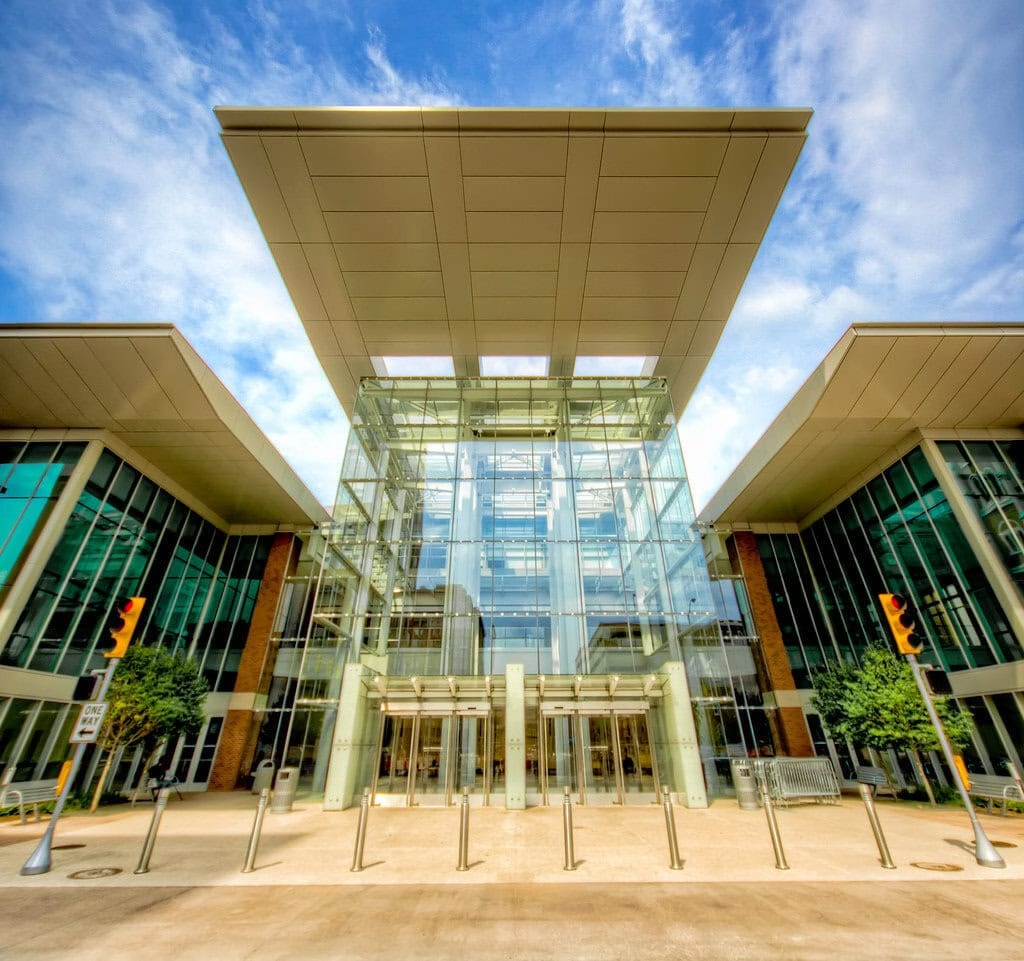
Downtown Indianapolis expo
Here on location in Indianapolis Indiana is one of the best magicians in indianapolis, Jon Finch. What I’m seeing ahead of me is the Indiana State Convention Center. That’s where I’ll be doing most of my work. I’ll do an article later inside the showroom and what to expect. This is a few days before the show, and Indianapolis IN will get crazy later.
Down there, way down there, I can see Victory Field since Ibought binoculars at Castleton Square Mall. That’s where the minor league baseball team for Indianapolis takes place. Ithought I’d take you readers on a little tour of Indiana and give you an idea what the Indiana Convention Center looks like.
Looks like a crazy Hoosier idiot around here talking to nothing, but I guess I’ll describe to you my hotel. It’s back here in the west end of Indianapolis Indiana. It’s a nice hotel though ridiculously expensive, but at least the company’s putting me out. That there isa small park, Indy has fountains and that sort of stuff.
One of the great things about Indianapolis IN is that there’s hoards of land all surrounding Indy, they canbuild out. They don’t have to build up like any other Midwest city; you’re not going to find a ton of skyscrapers or anything like when visiting Indy, which is what I’m used to seeing in other Midwest cities.
Just to the left, there’s Reggie Miller dribbling near the Hyatt Hotel of Indianapolis. A bunch of the employees get put up in that hotel. It’s going to get crazy, there’s probably going to be somewhere around a hundred thousand people that will go through this convention at the Indiana Convention Center that gen con does.
Let’s see; maybe I’ll take you readers down to Lucas Oil. Let’s go that way first; this is literally in the heart of downtown Indianapolis—much from many cities I’m used to seeing. My apologies ahead of time for how my writing might be, and off goes a car alarm.
Within Indianapolis IN, I see a barrage of buildings like this church, cool. Around Indy, many of them, unfortunately, are boarded up, and nobody is taking care of them. The city struggles with poverty around here, and I’m dripping in sweat. It’s about 97 degrees today looking somewhere around 90% humidity would be my guess.
Otherwise known as death.
There’s another church back there, an old-looking building. Later I’ll describe to you guys Conseco Field House, and the city center. There’s a city center fountain. Quite a bit of construction going on in Indianapolis IN as I’m sure you can tell I’m writing. It’s tons of chatter about the eagles have been doing lately, getting dumped me projects from motor speedway, sharp corner, IUPUI is awesome.
Well, they’ve done a fabulous job, and I look at the Indianapolis Colts to be super bowl contenders. All this I see is more Indiana Convention Center. Maybe I can see gen con. That’s more exhibitor headquarters. This is an all brand spanking new building; this is where the old Indianapolis Colts RCA Dome used to be—I remember when it used to be called the Hoosier Dome. Theyhad it Indiana Convention Center, all I’m going to be able to use this here.
The show is only grown remarkably. It’s got bigger and bigger. I do my best to keep this to a 1000 word article. Every year, I’m more and more amazed at how much this thing has grown. I’ve been doing this for about seven years, and for six years, Gen Con itself has been around for 45 years and has still not taken place in Eiteljorg. Fortunately, the Indianapolis city planners poorly planned they put Gencon during the same time as the sports card convention, and they’re reasonably close because I’m in Indianapolis IN.
Once I come out of this town, I’ll be able to show you Lucas Oil. I’ll probably get slandered proud crazy and stupid long. In fact I have no cards here. We come upon Colts country. I should be able to start seeing it now. This is where the Indiana Convention Center ends. I’m about to peek out on to Lucas Oil. I see it now. Here is Lucas Oil Stadium, a magnificent place.
Last year for a preseason game, you got Peyton Manning. Just an incredible-looking stadium. There you have it, reader, to give you a bit of an idea what Indianapolis Indiana looks like. It’s way over there, over there by the green pillars near White River State Park.
In Indiana right now, and this, the jewel of the city. Big, tall, fountain.
there’s not the construction with the crane going on up there, interrupting my writing. But this is to be famous, Iwanted to write about this. It’s a big center-like circle in the city, right smack dab in the middle. Usually, I get closer and wish I could.
In previous years this wasn’t happening, you could get up, go on the stairs, you can go inside the tower. Go all the way up to the top. Ithought I’d describe what it’s like here.
Indianapolis Indiana is beautiful; after this I’m going back to Eagle Creek Park. Slightly more up close, maybe they let me get closer around the other side, but despite the crazy hours I work it is nice to arrive a day early and get to remember what the city is all about. Now it looks like they’re not going to let me get any closer, but this is a more delicate side of the fountain I’ll bring it around to. It’sone big circle full of little restaurants like the rathskeller.
A few other things around Indianapolis Indiana. Many French restaurants too. Oddly a lot of French restaurants, some burger shops, and restaurants in Indianapolis. All right now I’m going to get a little closer, despite traffic is going to hate me. All right far, I have a better view. The family guys over anyway. There’s the lovely fountain waterfall back there. I see around this, tons of tall buildings. Everywhere you look. This is the center of Indianapolis IN.
There’s one other thing I guess I forgot to write about on my little tour of Indianapolis Indiana. That’s the capitol building in front of my nose. Hopefully I get something a little less destructed. I’mon my way back to my hotel, putting me up—gorgeous building in Indy.
I think the old school style. White River State Park back in the day, see the American flag way up there, along with the Indiana state capital flag. Not on varying fitting name capital and senate or the two, but it’s on I65. Let’s see if I can focus a bit—the first time I’ve ever used my puny Hoosier brain this way. There you go, reader, there’s my take on my state capital, Indianapolis Indiana.